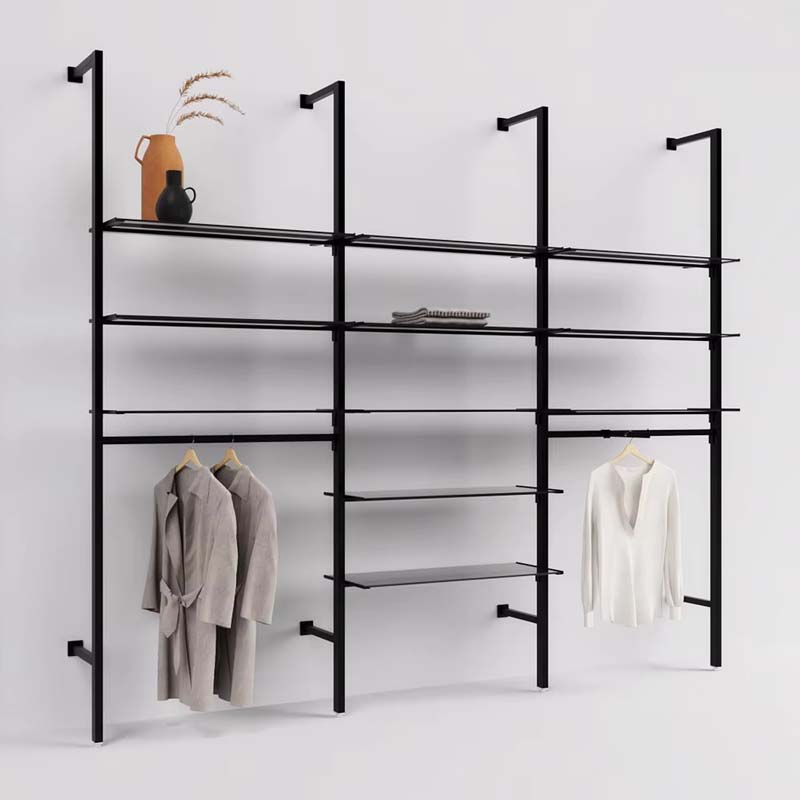

Custom acrylic displays work well when a project needs transparent or colored product presentation, formed shapes, polished edges, lightweight covers, risers, trays, sign holders, or purpose-designed illuminated panels. They can fail when buyers treat “acrylic” as a complete specification. Standard PMMA can scratch, craze after incompatible chemical exposure, bow under insufficient support or sustained load, move with temperature, concentrate stress around holes and sharp corners, and remain combustible.
A reliable RFQ should identify the exact acrylic product and process, cast or extruded form, thickness and support geometry, optical and cosmetic limits, edge and joint details, real cleaning chemicals, temperature and UV exposure, impact risk, lighting and electrical interfaces, packaging, and sample-based acceptance tests.
What Are Custom Acrylic Displays?
Acrylic is the common trade name for polymethyl methacrylate, or PMMA. A custom acrylic display uses one or more PMMA components that are cut, routed, drilled, bent, thermoformed, polished, printed, bonded, or mechanically fastened for a defined retail project. Common formats include countertop stands, tiered risers, product cradles, trays, bins, brochure holders, sign holders, dust covers, locking cases, cosmetic testers, transparent panels, and edge-lit signs.
Brand names such as ACRYLITE, PERSPEX, OPTIX, and PLEXIGLAS should not be used as generic synonyms for every acrylic sheet. Products differ by manufacturing process, molecular weight, impact modification, coating, color, texture, optical formulation, thickness, masking, and intended use. “Custom” describes fit to the product and store—not automatic strength, scratch resistance, outdoor durability, fire compliance, or electrical approval.
When Is Acrylic the Right Display Material?
| Project need | Why acrylic may fit | What must be verified |
|---|---|---|
| Clear product visibility | Named clear PMMA grades can provide high light transmission and low color bias | Exact grade, thickness, haze, tint, edge quality, adhesive appearance, fingerprints, and inspection lighting |
| Risers, trays, covers, and formed shapes | PMMA can be machined, line-bent, thermoformed, and bonded | Heat history, corner radius, draw, shrinkage, residual stress, dimensional tolerance, and first article |
| Lower component weight | Named clear PMMA sheets commonly report relative density near 1.19 | Final geometry, packed weight, support spacing, load, deflection, and handling route |
| Polished visual edges | Different machining and polishing methods can produce distinct clear or matte edges | Edge method, chips, haze, heat stress, later bonding or printing, and approved physical master |
| Illuminated graphics | Specialty light-guiding or diffusing PMMA grades can distribute LED light | Named lighting grade, panel size, LED coupling, edge finish, reflector, graphics, heat, and illuminated sample |
| Frequent shopper contact | Coated or impact-modified grades may suit some high-touch applications | Actual contact, cleaner, scratch, impact, coating-side, fabrication, and replacement tests |
Acrylic is often strongest as one component in a mixed-material fixture. A metal frame may carry the main load while replaceable acrylic trays, covers, dividers, or sign holders deliver visibility and branded form. The correct system depends on merchandise, store operation, service environment, and rollout plan.

Cast vs Extruded Acrylic: Which Should You Choose?
Neither process is universally better. Röhm explains that its ACRYLITE cell-cast sheet is polymerized in individual glass cells, while its extruded sheet is made continuously from extrusion-grade polymer. Within that manufacturer’s product families, cell cast offers broader thickness and custom-color options and may be the better starting point for extensive machining, polishing, critical visual work, or long-term loading. Extruded sheet can offer tighter thickness tolerance and efficient forming and cementing.
Those are supplier-specific tendencies, not a rule that ranks every sheet from every producer. A specialty grade may matter more than the cast/extruded label. High-impact use may require impact-modified PMMA or another material. Frequent chemical contact may require a named chemical-resistant grade. Illuminated panels may require a light-guiding or diffusing formulation. Hard-wearing viewing surfaces may justify a coated grade with documented fabrication limits.
At minimum, the purchase specification should state manufacturer and product family or an approved-equal performance definition; cast, extruded, or continuous-cast form; standard or specialty grade; color, texture, coating, and show face; nominal thickness and tolerance; masking; data-sheet evidence; and written substitution approval.
Keep Optical Claims Attached to the Exact Product
Several first-party data sheets for named clear PMMA products report approximately 92% total or visible light transmission and relative density around 1.19 under their stated test methods and thicknesses. These figures do not apply automatically to every tint, texture, coating, print, adhesive, formed part, or finished display.
ASTM D1003 is a method for measuring haze and luminous transmittance of transparent plastics; it is not a universal quality threshold. If clarity is commercially important, state the current method, specimen thickness and condition, test locations, transmission and haze limits, and whether the part is tested before or after forming, bonding, cleaning, abrasion, or weather exposure.
Cosmetic inspection also needs controlled conditions: approved color and edge samples, lighting, background, viewing angle, distance, and time. Define permitted scratches, specks, bubbles, flow lines, low-angle distortion, edge haze, adhesive bloom, print mismatch, masking residue, and illuminated hot spots instead of asking only for “crystal clear acrylic.”
Why Thickness Alone Does Not Determine Strength
There is no defensible rule that one thickness suits every countertop stand or shelf. Performance depends on the exact PMMA grade, unsupported span, section shape, ribs and supports, uniform or point load, load duration, temperature, holes, corners, joints, fasteners, and acceptable deflection.
Material tensile or flexural values from a standardized flat coupon are not shelf capacities. A long clear shelf may look unacceptable because of visible bowing before it reaches a short-term material failure value. Sustained load and heat can increase creep. Product feet can create local point loads, while tight fasteners, sharp inside corners, notches, and poorly placed holes can concentrate stress.
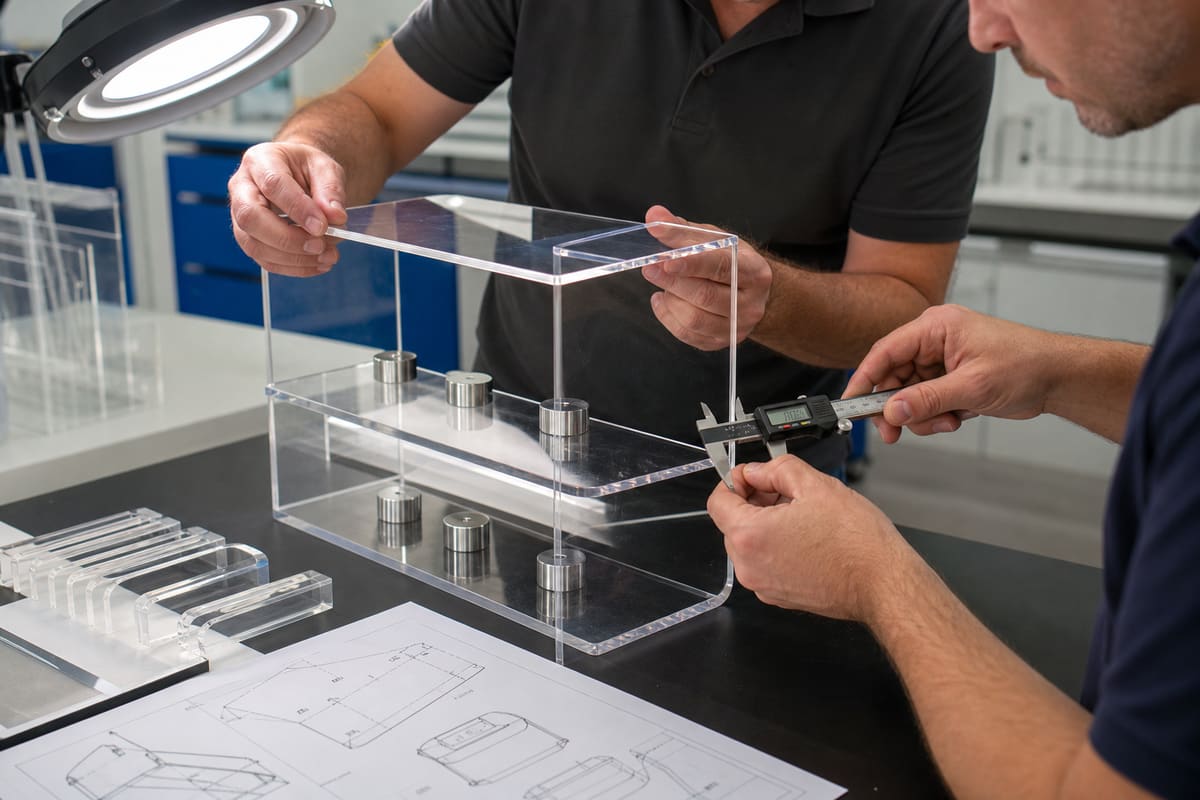
Give the supplier the real product matrix and assembled load cases. Define support geometry, load position and duration, service and test temperature, maximum instantaneous deflection, residual deflection after unloading, crack and craze criteria, sample conditioning, and whether calculation, physical testing, or both are required. Test the complete assembly—including brackets, adhesive, fasteners, edge treatment, and worst credible product placement.
Fabrication Choices Change the Finished Display
Cutting, routing, drilling, and laser work
Tool condition, support, chip removal, speed, feed, and heat control affect edge quality and residual stress. A laser-cut edge can look polished yet retain heat-induced stress that matters during later bonding, printing, cleaning, or chemical exposure. Define the process, tolerance, hole and corner geometry, chip allowance, deburring, annealing decision, and compatibility test after all finishing steps.
Thermoforming and line bending
Forming temperature and time depend on the exact sheet, thickness, equipment, mold, and draw. Cast and extruded products soften and shrink differently. Specify the material and lot, forming process, show face, masking and pre-drying rules, mold surface, minimum radius, wall-thickness distribution, cooling fixture, critical dimensions after conditioning, and limits for webbing, thinning, bubbles, marks, warpage, and stress.
Bonding and edge finish
Solvent and polymerizing cements require different joint, gap, preparation, application, ventilation, and cure controls. Some coated, impact-modified, printable, or chemically resistant grades require different adhesive systems. Record the approved adhesive, joint geometry, surface preparation, fixture and full-cure times, bubble and bloom limits, strength test, and prohibition on substitution.
Specify every visible edge as machined matte, sanded, buffed, diamond polished, flame polished, laser cut, radiused, chamfered, or hidden. Approve a physical edge master and inspect for chips, tool marks, waviness, burn, whitening, residue, sharpness, and optical distortion.
Where Do Acrylic Displays Fail?
Scratching and abrasive cleaning
Standard acrylic should not be described as scratch-proof. Grit, dry wiping, abrasive cleaners, scrapers, metal packaging, jewelry, and repeated shopper contact can change gloss and clarity. Use the actual finished part, approved cloth and cleaner, realistic soil, and a defined number of cycles, then inspect scratches, haze, gloss, and product readability under controlled lighting.
Chemical crazing
Crazing can develop when stress and incompatible chemicals act together. Cutting heat, laser edges, flame polishing, tight fasteners, bends, drilled holes, and bonded joints may add stress; cleaners, perfume, sanitizer, cosmetics, adhesives, label remover, inks, gaskets, or packaging fumes may then trigger fine cracks. A flat, unstressed material coupon is not enough. Test the real chemical at the real concentration, dwell, temperature, wiping, and cycle count on a representative fabricated and stressed assembly.
Heat, UV, and weather exposure
Named PMMA grades publish different softening, service-temperature, weathering, and UV-transmission data. Do not treat a sheet warranty or one product’s temperature as permission to install any acrylic beside hot lamps, power supplies, food equipment, heaters, or sun-loaded windows. Include LEDs, drivers, screens, prints, adhesives, and coatings in the thermal and exposure test.
Impact, notches, static, and dust
Acrylic is not unbreakable. Finished-part impact depends on grade, thickness, shape, temperature, holes, edges, support, and impact direction. Specify a credible event and safe-failure criteria rather than relying on a coupon impact number. Removing masking and handling PMMA can also generate static that attracts dust, so printing and cosmetic work may need humidity, grounding, ionization, clean handling, and final packaging controls appropriate to the exact grade.
How Should Illuminated Acrylic Displays Be Specified?
Ordinary clear acrylic does not automatically produce an evenly illuminated panel. Specialty light-guiding grades use controlled particles and optical design to distribute light. The buyer should identify the named grade and thickness, illuminated area, one- or two-sided output, LED module and pitch, color and driver, edge-coupling detail, polished input edge, reflectors, graphics, ventilation, temperature, service access, and measurable luminance, uniformity, hot-spot, and light-leak limits.
Powered displays also need an agreed product-evaluation route. UL Solutions identifies UL 970 as relevant to commercial displays, retail fixtures, showcases, and temporary displays, including products with lighting and digital elements. A marked LED strip or power supply does not certify the complete display. Confirm the finished configuration, component records, field modifications, retailer requirements, testing or listing path, installer responsibility, and authority-having-jurisdiction acceptance.
Is Acrylic Fireproof?
No. PMMA manufacturers identify acrylic sheet as combustible. UL 94 classifications are controlled, small-scale material-test results for a particular material, color, thickness, and specimen orientation. They do not automatically approve a complete retail display or account for its size, adhesives, graphics, wiring, stored products, installation, or local code.
Do not call a display fireproof, flameproof, self-extinguishing, or code compliant without exact evidence. Confirm the destination, retailer and landlord standards, actual material recognition, finished-product scope, electrical evaluation, and local authority requirements before release.
Protect the Show Surface During Shipping
A display can arrive structurally intact yet be commercially unusable because of scratches, rub marks, edge chips, print transfer, masking residue, or chemical contact. Specify compatible masking, show-face identification, clean non-abrasive interleaves, separated polished edges and corners, isolated hardware, prohibited tapes and foams unless tested, storage and stacking conditions, and an unpacking sequence that keeps knives away from the product.
Select a current ISTA or buyer procedure for the actual packaged weight, configuration, handling, and parcel, freight, ocean, or store route. After the test, inspect not only breakage but cosmetic appearance, joints, distortion, loose hardware, masking, prints, and illuminated function. A packaging test supports only the tested product-package configuration.
Custom Acrylic Display RFQ Checklist
- Display format, store position, indoor/window/outdoor use, intended life, rollout quantity, and destination
- SKU dimensions, weights, facings, tester or security needs, replenishment, cleaning, relocation, and replacement plan
- PMMA manufacturer/product or approved-equal specification; cast, extruded, or continuous cast; standard or specialty grade
- Color, tint, texture, coating, impact or chemical modification, lighting grade, thickness, tolerance, show face, and masking
- Transmission, haze, color, edge, print, joint, and illuminated criteria with approved samples and inspection conditions
- Span, supports, ribs, frame, uniform and point loads, duration, temperature, allowable deflection, and residual set
- Hole and corner geometry, fastener clearances, washers or gaskets, torque, movement allowance, and impact scenario
- Cutting, routing, drilling, forming, polishing, bonding, annealing or stress-control process, cure, and process evidence
- Real cleaners, cosmetics, adhesives, sealants, packaging contacts, exposure conditions, cycles, and acceptance criteria
- LEDs, driver, wiring, thermal management, optical targets, service access, electrical evaluation, and fire requirements
- Masking, interleaves, edge protection, packed size and weight, route-specific packaging test, and post-test inspection
- Material coupons, representative fabricated component, complete first article, golden sample, inspection plan, and change control
What Should Be Approved Before Production?
Approve the exact acrylic product and a representative fabricated, loaded, cleaned, illuminated, and packaged first article—not a generic material swatch. Freeze the product grade, drawings, BOM, thickness, supports, fabrication process, edges, joints, graphics, cleaners, test methods, cosmetic standards, packaging, and inspection plan before rollout.
Kainan can review a product matrix, desired appearance, store environment, cleaner list, lighting requirements, rollout quantity, and distribution route to develop a project-specific display proposal. Explore our custom display stands, display cabinets, and custom retail fixture specification guide. For broader material choices, read our custom POP display material guide, or send your acrylic display requirements for review.
Sources and Scope
Primary references accessed August 25, 2026: Röhm ACRYLITE cell-cast physical properties; Röhm cast-versus-extruded guide; ACRYLITE chemical resistance chart; Plaskolite OPTIX fabrication guide; PERSPEX design guide; ASTM D1003; UL retail-fixture reference guide; UL 94 limitations; and ISTA test procedures.
Scope note: This guide supports early material selection, RFQ preparation, and prototype review. It does not replace current product data sheets, licensed standards, engineering, laboratory testing, chemical-safety review, electrical evaluation, retailer requirements, or authority approval for a specific display and destination.