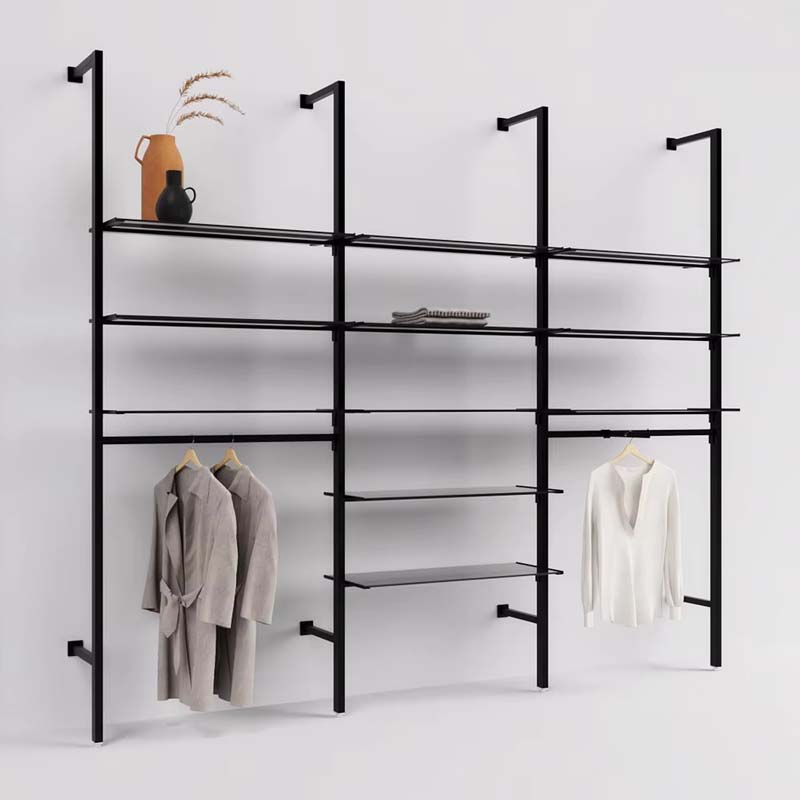
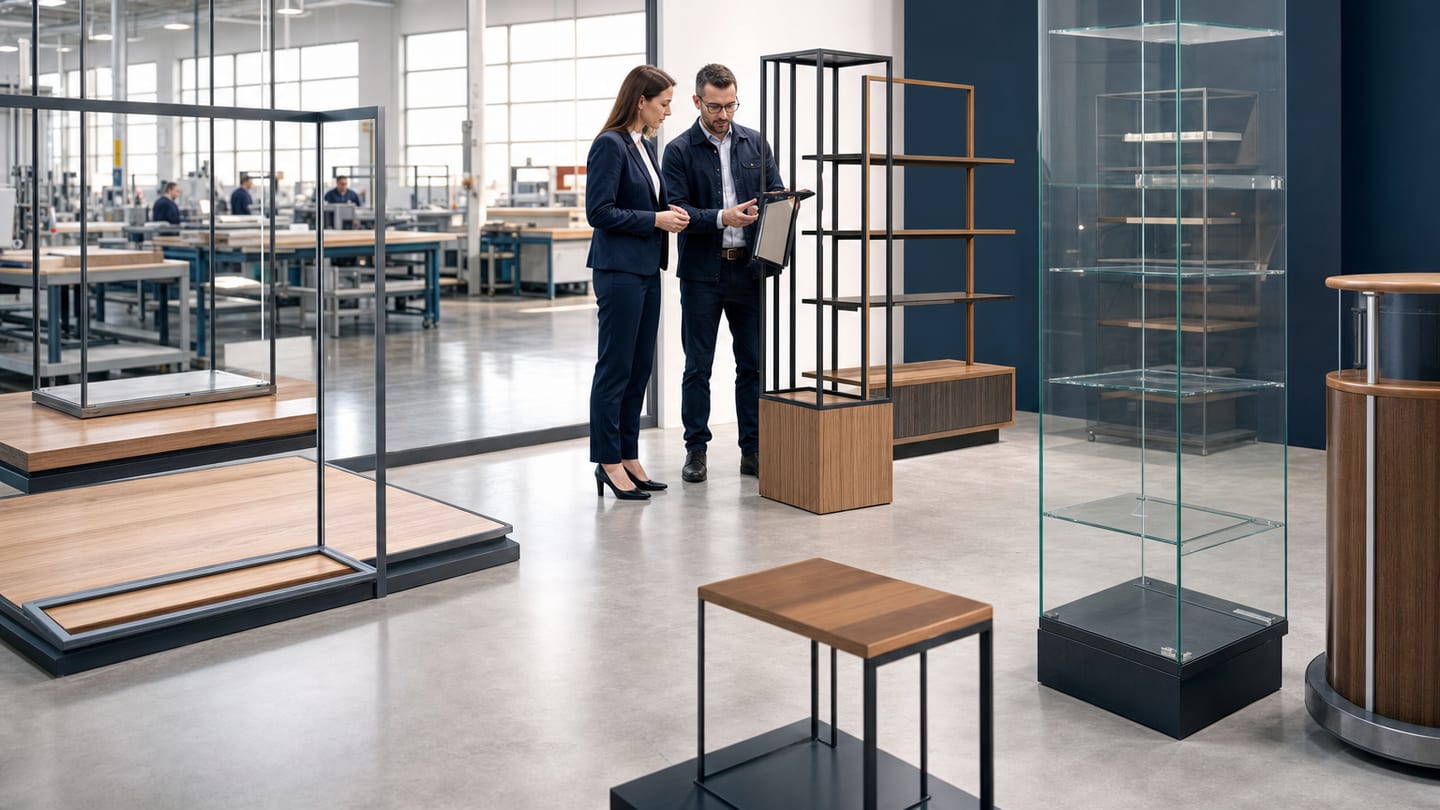
Choosing a custom retail display fixture manufacturer is not simply a price comparison. A reliable supplier should be able to turn your store requirements into an approved, documented fixture and then reproduce it consistently across every location. Buyers should verify engineering capability, material and process fit, prototype controls, quality management, packaging, delivery planning, and evidence behind any compliance claims before approving a vendor.
This checklist is designed for procurement managers, retail design teams, visual merchandising leads, and store development managers sourcing custom display racks, stands, cabinets, counters, or complete fixture programs.
What Does a Custom Retail Display Fixture Manufacturer Do?
A custom retail display fixture manufacturer converts a brand’s functional and visual requirements into production-ready store equipment. Depending on the project, that can include concept development, engineering drawings, prototypes, metal or wood fabrication, acrylic and glass integration, finishing, graphics, electrical components, packaging, and bulk production.
The important word is custom. The fixture may need to fit a defined footprint, carry a specific product load, match a brand color, survive frequent customer contact, ship efficiently, assemble predictably, and remain visually consistent across many stores. A portfolio photograph shows what a supplier made once; a controlled process shows whether the supplier can make it repeatedly.
The Eight Capabilities Buyers Should Verify
1. Relevant engineering capability
Ask how the supplier turns a brief into controlled drawings and a bill of materials (BOM). The engineering team should be able to explain dimensions, tolerances, joining methods, stability, loading assumptions, assembly, maintenance, and any electrical integration. Request examples that use similar materials, finishes, functions, and production volumes—not only fixtures that look attractive.
2. Material and process fit
A supplier does not need every process in-house, but it should disclose what it controls directly and what it subcontracts. For a mixed-material fixture, confirm capability in the critical operations: metal cutting and welding, powder coating, woodworking, acrylic fabrication, glass handling, lighting, graphics, or final assembly. Also identify the legal entity, production site, and subcontractors responsible for your order.
3. Prototype and sample control
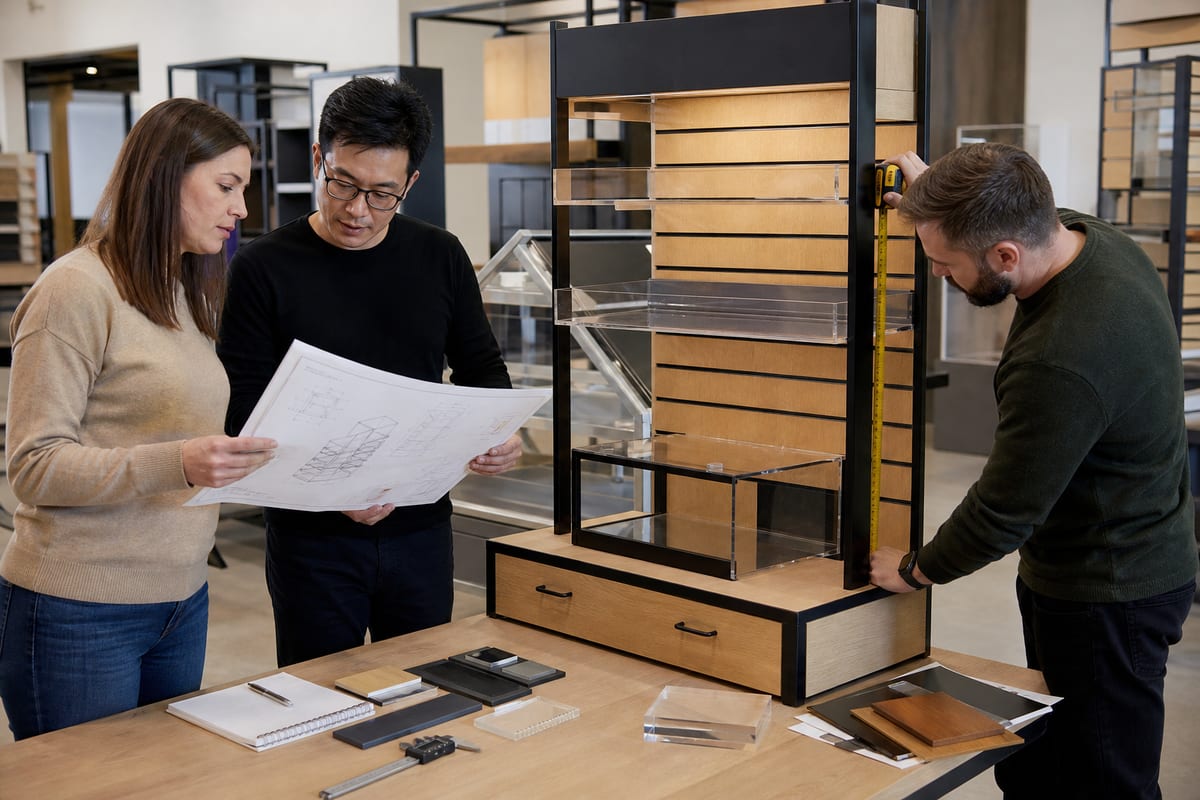
A representative prototype lets the team test appearance, function, dimensions, stability, assembly, maintenance access, and pack-out before volume production. But a sample alone is not a specification. Record every approved detail in drawings, the BOM, finish standards, hardware lists, graphics files, assembly instructions, and packaging requirements.
4. A controlled quality system
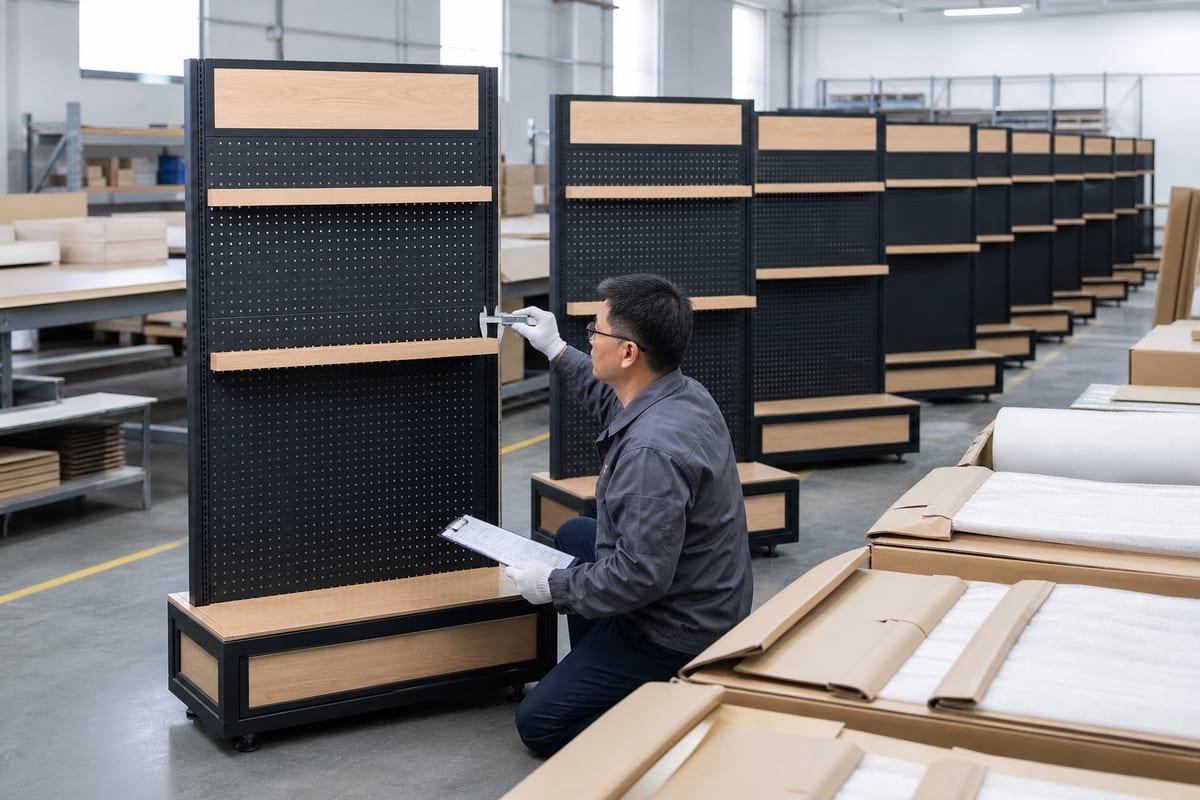
ISO 9001 is evidence that an organization’s quality management system has been assessed within a stated scope; it is not product certification and does not guarantee zero defects. If a supplier presents an ISO 9001 certificate, check the certified entity, site address, scope, certification body, and validity. Then connect that system to your project through defined incoming-material, in-process, and final inspections.
5. Compliance evidence with clear boundaries
Certificates, audit reports, and test reports answer different questions. Verify the exact entity, site, scope, product or material, issue date, and validity behind each claim.
- FSC Chain of Custody: if FSC-labelled forest-based material is required, verify the certificate holder, scope, eligible product group, and transaction claim. It does not automatically certify every component of a mixed metal, wood, acrylic, and glass fixture.
- SMETA: SMETA is a social-audit methodology, not a certification. Ask for the audited site, audit date, 2-Pillar or 4-Pillar scope, findings, and corrective-action status.
- Product and market requirements: name the jurisdiction, standard, edition, component, and test evidence. Avoid accepting a generic promise to meet “international standards.”
6. Repeatability from pilot to volume
Multi-store programs require more than a successful prototype. Ask how the manufacturer transfers the approved design into work instructions, inspection records, jigs, color and finish references, approved suppliers, and change control. A pilot run or first-article review can reveal production issues before the full rollout begins.
7. Packaging and logistics planning
A well-made fixture can still fail if it is difficult to pack, handle, identify, or assemble at the destination. Review carton or crate construction, internal protection, hardware packs, labels, palletization, container efficiency, assembly instructions, and replacement-part handling. Any packaged-product testing should be selected for the fixture, package, shipping mode, destination, and expected distribution hazards rather than copied from an unrelated product.
8. Clear commercial and change responsibilities
The quotation and contract should define more than price. Clarify tooling ownership, drawing and CAD ownership, payment milestones, sample approval, inspection responsibility, material substitutions, engineering changes, delivery terms, spare parts, nonconformance, rework or replacement, and responsibility for added costs.
OEM vs ODM: Which Model Fits Your Project?
OEM and ODM are commercial working models, not quality credentials. Their meaning can vary, so define responsibilities in the contract rather than relying on the label.
| Question | OEM-style project | ODM-style project |
|---|---|---|
| Starting point | Buyer supplies a developed design or detailed requirements | Manufacturer contributes more of the underlying concept or product design |
| Supplier role | Engineering for manufacture, prototyping, and production to the approved specification | Concept development plus engineering, prototyping, and production |
| Buyer should clarify | Permitted engineering changes, validation, and design responsibility | Design ownership, exclusivity, derivative use, and access to source files |
| For both models | State who owns drawings, CAD files, tooling, jigs, prototypes, test data, and later revisions | |
A supplier that advertises “full OEM/ODM capability” should still be evaluated through relevant engineering outputs, prototypes, production evidence, and contractual terms.
Questions to Ask Before Requesting a Quote
- Have you produced fixtures with comparable materials, finishes, functions, and order volumes?
- Which processes will be completed at your own site, and which will be subcontracted?
- Who will create and approve drawings, the BOM, tolerances, and assembly instructions?
- How will the prototype be reviewed, documented, and retained as an approval reference?
- What incoming, in-process, and final inspections will be recorded for this project?
- How are material or process changes requested and approved after specification freeze?
- How will the fixture be packed, labelled, shipped, assembled, and serviced at the destination?
- Which certificates, audit reports, and product test reports apply to the actual entity, site, material, and order?
- How are defects, deviations, rework, replacement, and corrective action handled?
- Who owns the design files, tooling, samples, and derivative designs?
Documents and Samples to Review
| Evidence | What to verify |
|---|---|
| Capability examples | Comparable materials, processes, functions, finishes, and production volume |
| Factory and subcontractor list | Legal entity, production sites, outsourced operations, and control responsibilities |
| Drawings and BOM | Revision, dimensions, tolerances, materials, hardware, finishes, graphics, and electrical items |
| Prototype or golden sample | Signed approval, photographs, measurable acceptance criteria, and storage/control method |
| Inspection plan | Inspection stages, records, acceptance criteria, responsibility, and failure response |
| Certificates and audits | Holder, site, scope, date, validity, findings, and applicability to the order |
| Packaging specification | Protection, labels, hardware, assembly instructions, palletization, and route-specific risks |
| Quality agreement or purchase terms | Change control, deviations, nonconformance, remedies, and cost responsibility |
Red Flags When Comparing Suppliers
- The quotation is detailed on price but vague on materials, finishes, tolerances, packaging, and inspection.
- Portfolio images are offered instead of evidence from comparable projects.
- The supplier will not identify production sites or subcontracted operations.
- Certificates are expired, issued to another entity, or presented without scope.
- “Sedex certified,” “SMETA certified,” or other inaccurate compliance language is used as a sales badge.
- The approved sample is not connected to controlled drawings, a BOM, or measurable criteria.
- Material substitutions and production changes can occur without written buyer approval.
- Packaging is discussed only after production is complete.
- There is no defined process for defects, deviations, corrective action, or replacement.
Buyer Checklist: From Shortlist to Approved Vendor
- Define the project. Record store type, product load, footprint, materials, visual intent, quantity, markets, installation model, and target schedule.
- Build a relevant shortlist. Match suppliers to the actual fixture type, processes, and rollout scale.
- Verify the production path. Confirm entities, sites, subcontractors, engineering ownership, and critical processes.
- Review evidence. Check current certificates, audit reports, comparable outputs, quality records, and packaging capability.
- Develop and approve the prototype. Test the fixture and convert the approval into controlled documentation.
- Freeze the specification. Approve the drawing, BOM, finishes, graphics, hardware, instructions, packaging, inspection plan, and revision.
- Validate production transfer. Use a pilot, first article, or another risk-based review before full volume.
- Monitor and improve. Track inspection results, deviations, damage, installation feedback, and corrective actions across batches.
Evaluating Kainan for a Custom Fixture Project
Kainan describes itself as an OEM and ODM custom retail display fixture manufacturer serving global chain brands. Its website states that the company works across metal, wood, acrylic, glass, and electronics and supports projects from design and prototyping through bulk production and rollout. Buyers can review Kainan’s stated manufacturing background on the About Us page, then examine relevant product capabilities such as custom display racks and custom display stands.
Those website statements are a starting point for due diligence, not a substitute for it. For your specific program, request the applicable drawings, samples, production plan, inspection controls, packaging proposal, and current certificate or audit evidence.
Prepare a Better RFQ
To receive a useful initial assessment, prepare your store type, fixture dimensions, product weight, reference images or drawings, preferred materials and finishes, destination markets, rollout quantity, and target timing. A clearer brief allows the manufacturer to identify engineering questions, material alternatives, prototype needs, and packaging risks before quoting.
Sources and Scope
This guide is a buyer-oriented due-diligence framework, not legal, engineering, certification, or market-compliance advice. Requirements vary by product, destination, store environment, and contract. Sources accessed August 20, 2026:
- ISO: ISO 9001 and quality management
- Forest Stewardship Council: Chain of Custody Certification
- Sedex: SMETA Audit methodology
- ISTA: packaged-product test procedures
- Kainan Display homepage and About Us